This installation aims to capture the intricate nature of the multiple crises we face today, including those related to the environment, economy, equality, and energy, and explore potential responses. It took me considerable time to comprehend the interrelationships between these issues, and I wanted to share my findings with others. Unfortunately, many individuals are still unaware of the gravity of the situation. To address these challenges, responses must prioritize equity and critically examine everything.
The participatory installation Down to Earth is part of the exhibition EcoArt: Envisioning Strategies and Solutions Curated by Deanna Pindell in collaboration with Women Eco Artists Dialog (WEAD)
Artworks Downtown Gallery
1325-1337 Fourth Street, San Rafael, CA 94901
February 3 – March 25, 2023
Here’s the timelapse of the installation
Here is the installation and the beginning of the public’s participation with the cardboard tags.
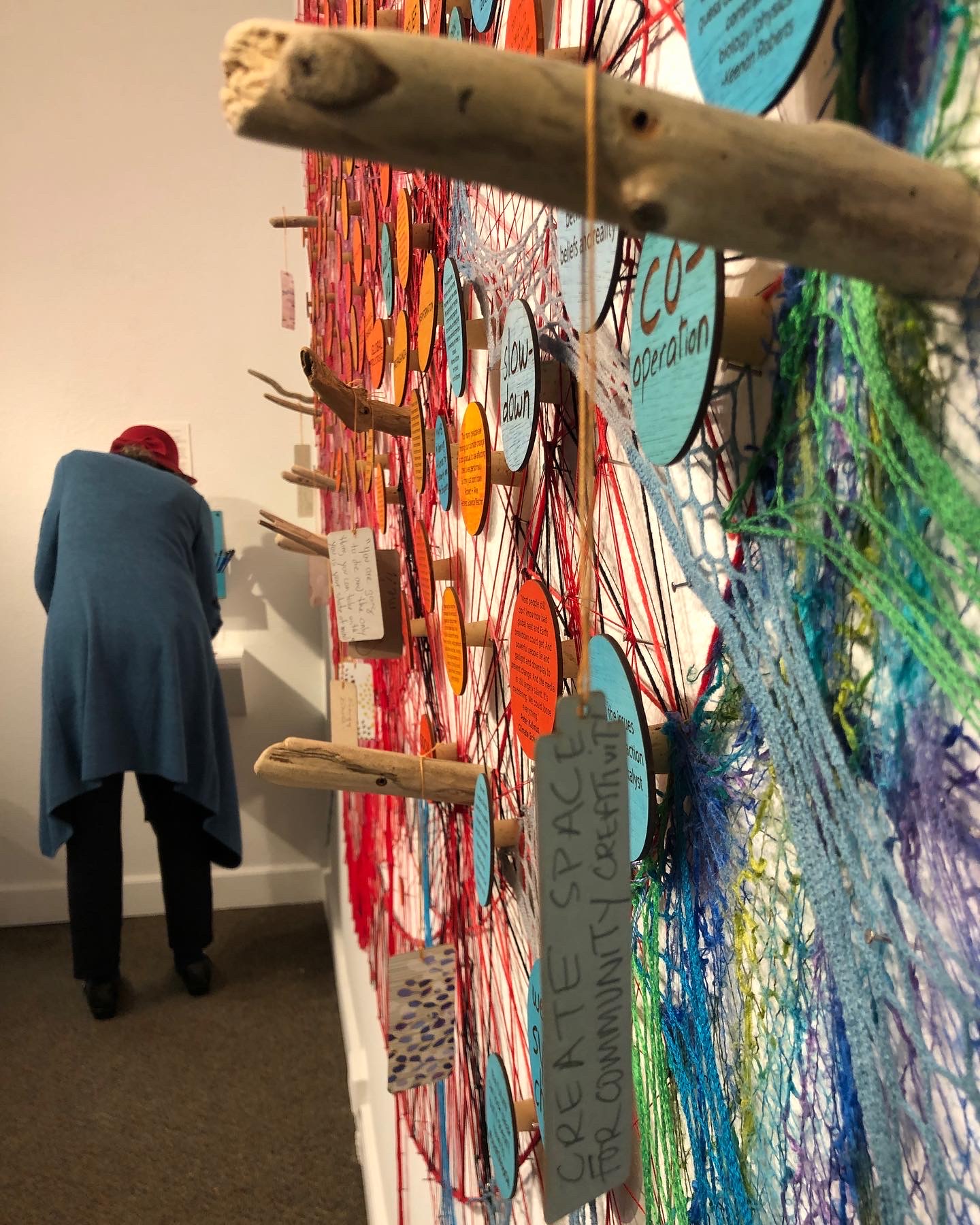

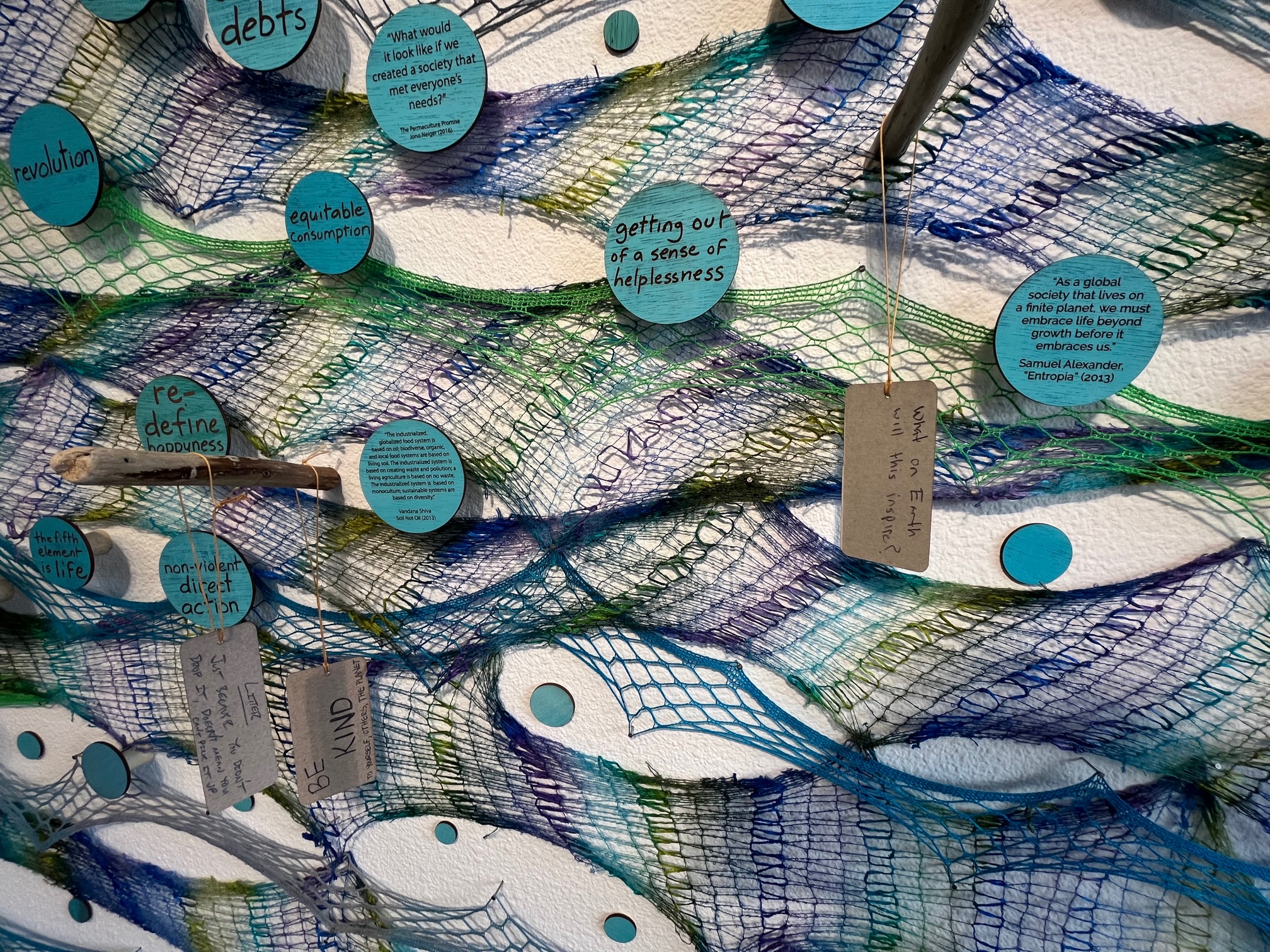

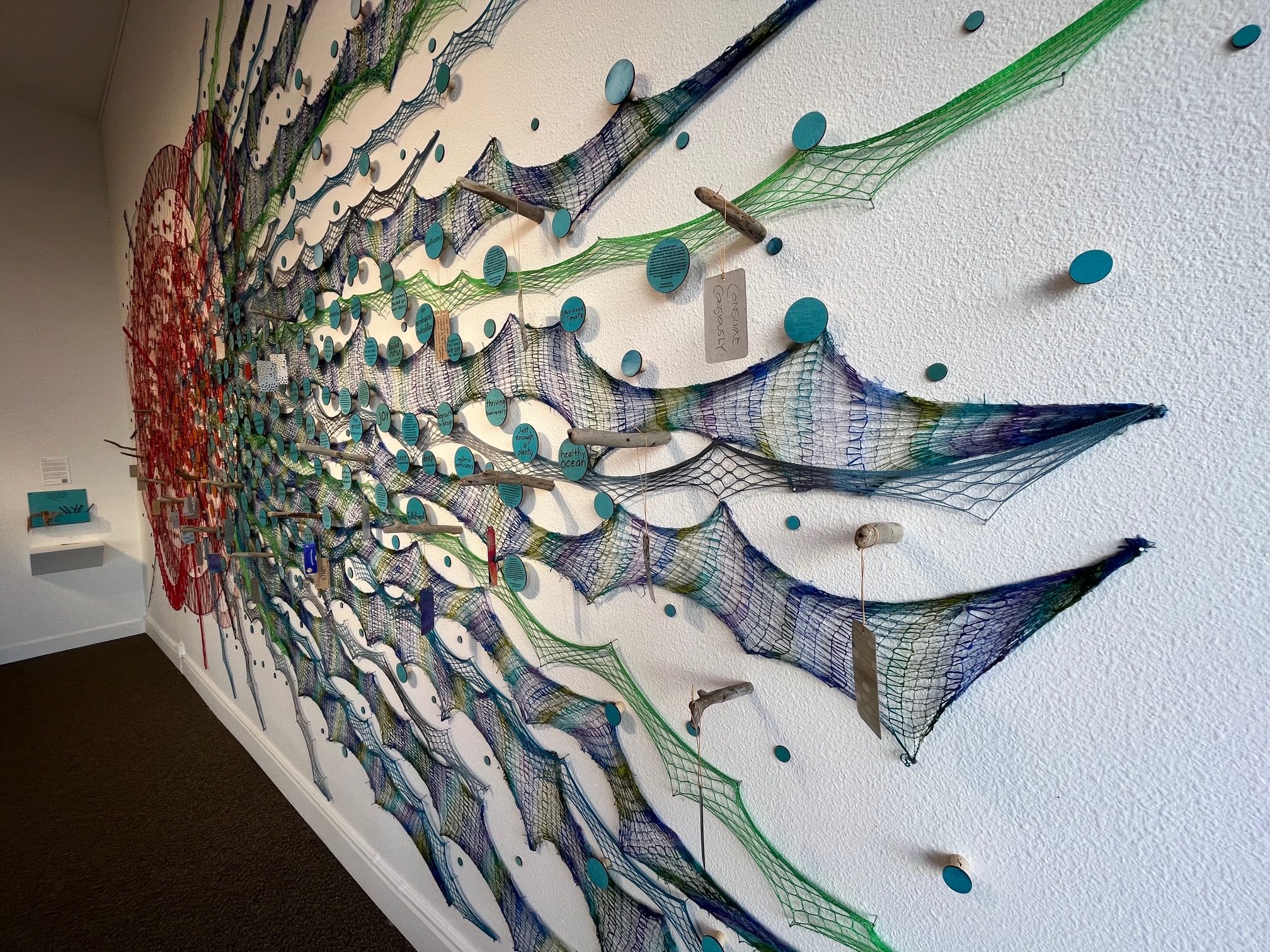
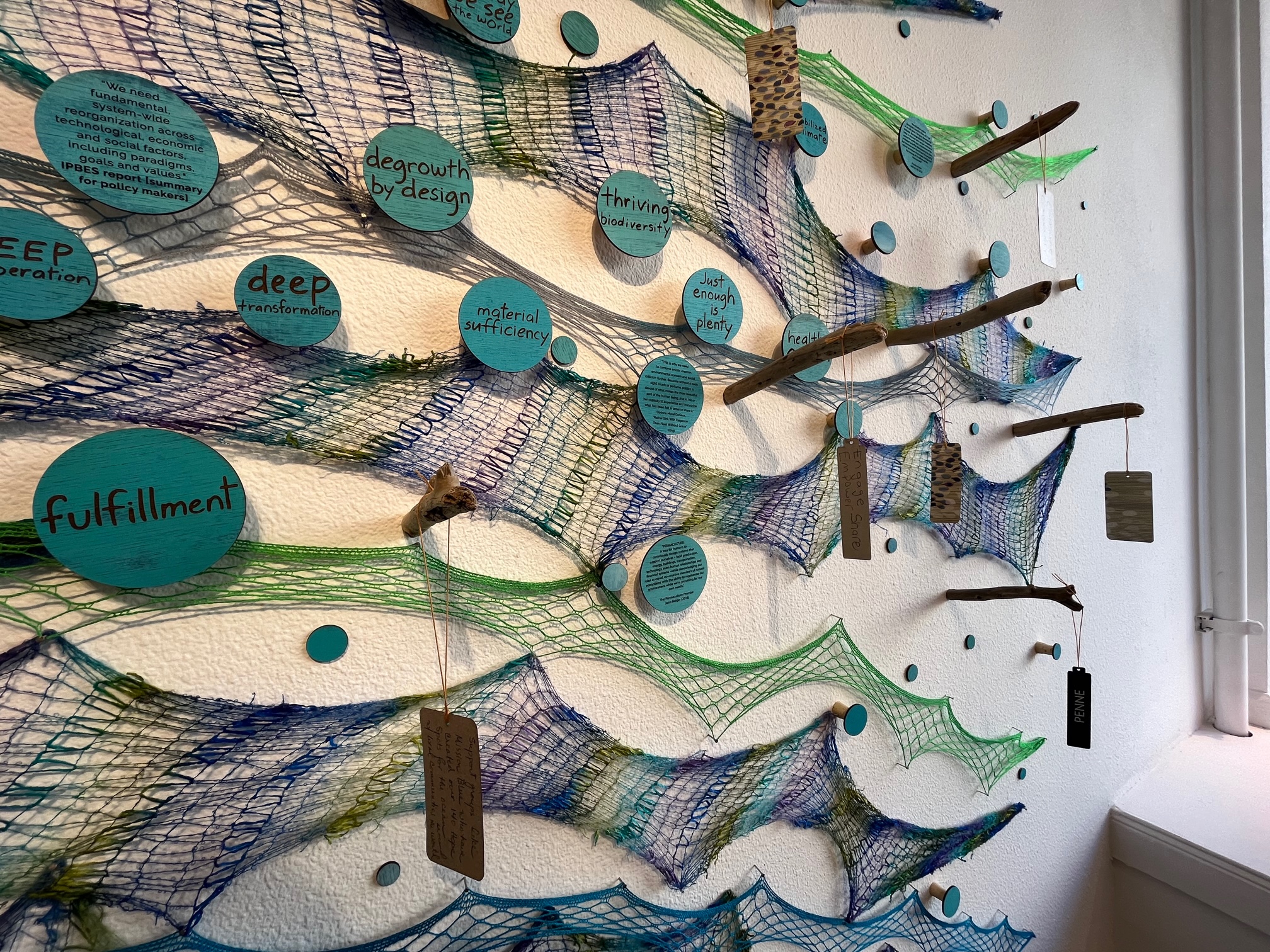

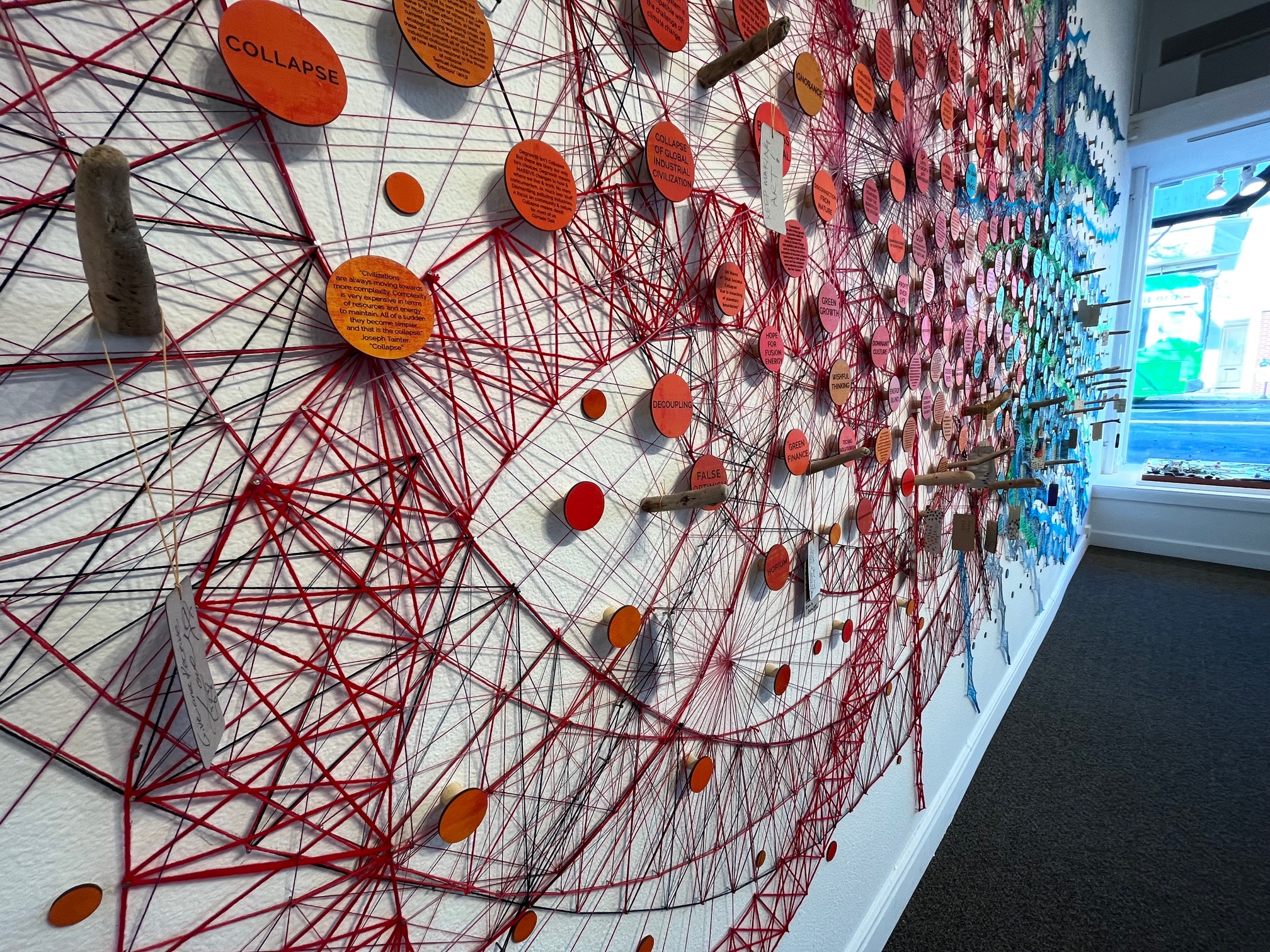
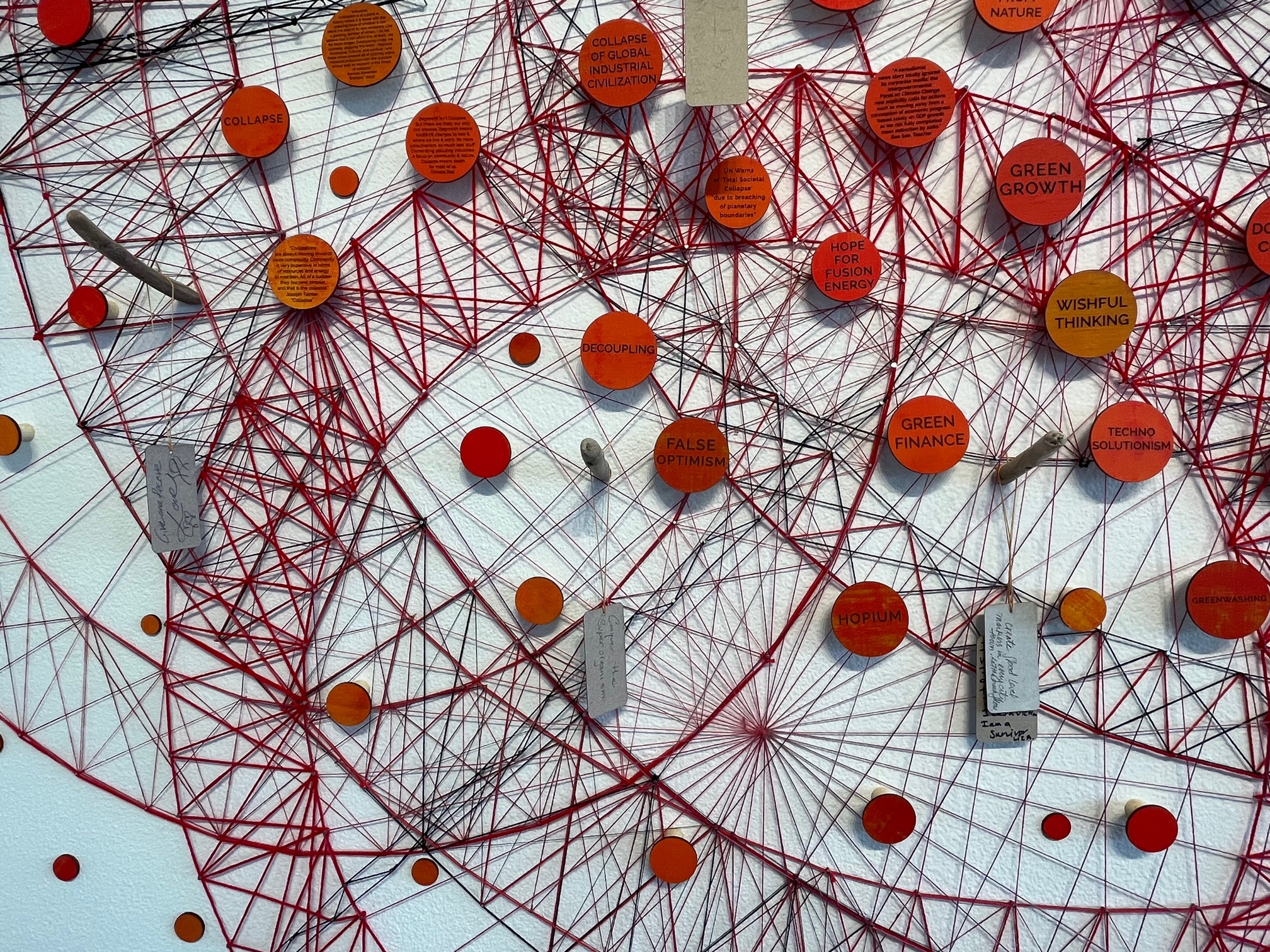

The problem is not climate change itself, but rather a system that prioritizes profit over life and destroys nature, leading to climate change as a symptom. Human consumption of resources exceeds the Earth’s ability to replenish them, primarily due to the widespread use of cheap fossil fuels, especially oil, which is concentrated, easily transportable, and storable. However, due to the harmful impact of fossil fuels on the biosphere, we must stop using them and prepare for significant changes in our lifestyles. Oil is ubiquitous in our daily lives, and its use is intertwined with everything we do and use.
To minimize the impact of their work, I use minimal materials and ensure that everything is reused for future installations. Each item is valuable not for its cost but for the hidden processes that produce it, such as the extraction of raw materials and the oil required for production.
The installation draws inspiration from scientific readings, podcasts, and books by people like Richard Heinberg, Nate Hagens, and climate scientists like Peter Kalmus. The work pays tribute to Limits to Growth, a book published in 1972 that highlighted the concept of a finite planet with no infinite growth.
Despite the recognition of this fact for over 50 years, the prevailing approach remains business as usual. Although renewable energy is an improvement, it is not a complete replacement for fossil fuels. Renewable energy infrastructure relies heavily on fossil fuels for the extraction of materials, production of parts, and transportation.
While the transition to renewable energy is possible, it will not prevent growing inequalities, deforestation, loss of wild territories, overfishing, chemical pollution, water scarcity, sea-level rise, and ocean acidification. Climate change is a complex and ongoing process, and the damage already caused cannot be undone. However, it is possible to curb further damage, and I prefer the term “responses” to “solutions.”
The installation invites visitors to share their thoughts, poems, ideas, or drawings on tags and place them on pieces of driftwood throughout the work. Down to Earth encourages people to gain a better understanding of what is at stake and recognize the urgent need for change. We must choose to slow down and shift our priorities from profit to life, or nature will inevitably force us to do so. Returning Down to Earth is crucial if we wish to preserve a habitable planet.
 michele guieu